What Happens To Home Insurance, Liability, And Warranties When You Add A Private Residential Elevator?
A private elevator quietly changes your coverage, your exposure to injury claims, and the paperwork you will need years later. Here is how to handle all three before the cab ever moves.

Why your insurer wants to know about the elevator
A residential elevator changes the risk profile of a house in ways an underwriter notices immediately. It introduces a machine with moving parts, a hoistway that penetrates floors, hydraulic fluid or a traction machine sitting in a confined space, and the real possibility that someone other than the owner will ride it. Most carriers do not treat any of that as exotic, but they do expect it disclosed at binding or at the next renewal, usually along with the drive type, the year of installation, and whether the equipment is covered by a service agreement. Silence is the expensive option, because an undisclosed permanent installation hands an adjuster a reason to argue about coverage at exactly the moment you need it honored. Related: Which Home Elevator Drive System Is Quietest And Most Reliable For Villas?
In practice the conversation is short and the premium effect is often modest, smaller than what a pool or a major roof change can move. What matters more is how the elevator is described on the policy. Ask whether it falls under dwelling coverage as a building system or whether anything needs to be scheduled separately, and confirm that the cab finishes, which can represent a meaningful share of the total spend on a luxury installation, are valued at replacement cost rather than actual cash value. Where the policy carries an equipment breakdown endorsement, ask specifically whether the controller, the drive unit, and the door operator are named, because those are the components that fail expensively. Related: How Much Should You Budget For A Luxury Residential Home Elevator?
Keep reading: How Much Should You Budget For A Luxury Residential Home Elevator?, Which Home Elevator Drive System Is Quietest And Most Reliable For Villas?, What Should Affluent Homeowners Know Before Installing An Elevator In An Existing House?. See how Homeliftr helps you an expert guide to elegant residential elevators.
Liability inside a private home, and who actually rides
Homeowners liability follows people, not just property, and the realistic exposures for a private elevator are a guest, a grandchild, a housekeeper, a contractor, or a caregiver. Two of those change the analysis entirely. Anyone you pay to be in the house may sit outside the ordinary guest assumption, and depending on the state and the hours worked, a household employee can raise workers compensation questions that a standard policy simply does not answer. If a caregiver rides the elevator several times a day as part of the job, ask your agent where that sits now rather than discovering the answer after an incident. Related: What Should Affluent Homeowners Know Before Installing An Elevator In An Existing House?
The second exposure is children. Older residential elevators became known for a hazardous gap between the swing door and the cab gate, and the industry response has been door space guards, tighter clearance requirements, and monitoring devices on new work. If you are buying a home that already has an elevator, treat that clearance as an inspection item rather than an assumption, and keep a record of what you found and what you corrected. Both insurers and courts respond far better to an owner who can show that a known hazard was identified and closed than to one who was simply unaware. Related: How Do You Choose Between Hydraulic, Traction, And Pneumatic Home Elevators?
Reading the warranty before the cab ever moves
A residential elevator warranty is normally two documents stacked together. The manufacturer covers the equipment, typically for a period measured in years on major components and a shorter window on wear items such as belts, seals, rollers, and lamps. The installing dealer covers labor, and that term is frequently much shorter than buyers expect. The gap between the two is where the real cost lives, because a controller board can be replaced at no charge under the equipment warranty while you still pay for the visit, the diagnosis, and the technician hours. Ask for both terms in writing, with the labor coverage stated as its own line rather than folded into a sentence about the warranty in general.
Then read the conditions that quietly void everything. The usual candidates are service performed by a firm other than the authorized dealer, water intrusion in the pit, use of the cab to move construction materials or furniture during a renovation, and failure to keep a maintenance agreement current. Several of those are easy to trip during the tail end of a build, when trades are still finishing and the elevator is the most convenient way to move a heavy load. Note also that warranties generally run to the original purchaser and to the address, not to you personally, so if resale is part of your thinking, ask whether coverage transfers, what the transfer costs, and whether an inspection is required first.
The records that protect you years later
Keep one folder, physical or digital, containing the building permit and the final inspection sign off, the state or municipal elevator certificate if your jurisdiction issues one, the installation drawings, the equipment serial numbers, the drive and controller documentation, the emergency lowering procedure, and every service ticket. This is the file that settles a claim quickly, satisfies a buyer's inspector without drama, and allows a new service company to take over the machine without charging you for a discovery visit. Owners who assemble it during construction rarely think about it again; owners who try to reconstruct it under pressure usually cannot.
Update it on a schedule rather than after a problem. Photograph the machine space and the pit once a year, log the date of each service call and what was replaced, and note every modification, including a finish change, a landline replaced by a cellular dialer, or a new smart home integration touching the controller. Owners who can produce that record tend to get faster claim decisions, cleaner renewals, and better answers from a technician who has never seen the equipment. Owners who cannot are asked to prove, long after the fact, something that would have taken five minutes to document at the time.
- Disclose the elevator to your carrier at installation or at the next renewal, and get the coverage description in writing.
- Confirm that cab finishes are insured at replacement cost and ask whether the controller, drive, and door operator fall under any equipment breakdown endorsement.
- Paid household help and grandchildren, not casual guests, drive most of the genuine liability questions worth raising with your agent early.
- Equipment and labor warranties run on separate clocks, and a lapsed maintenance agreement or a wet pit can void both.

Julien Jimenez
Julien Jimenez is an independent software builder based in Paris. He designs, ships, and operates focused SaaS products for small businesses and independent professionals. Read the full author page.
Elevate the Home You Love
An expert guide to elegant residential elevators. Homeliftr is built to help you put this into practice.
Request a consultationMore from the Homeliftr blog

How Much Should You Budget For A Luxury Residential Home Elevator?

Which Home Elevator Drive System Is Quietest And Most Reliable For Villas?
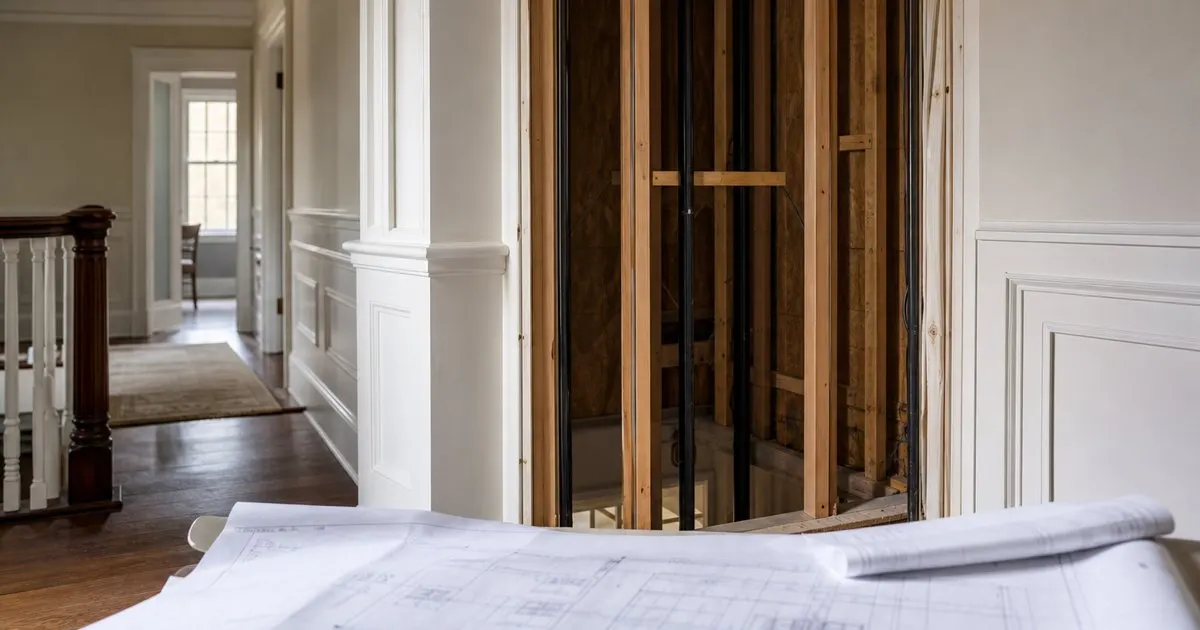
What Should Affluent Homeowners Know Before Installing An Elevator In An Existing House?
Get the complete residential home elevators guide
Our full buying guide, the price guide, and new research as we publish it. One email, no spam, unsubscribe any time.