What Should You Expect To Live Through While A Home Elevator Is Installed In An Occupied House?
Retrofitting an elevator into a house you still live in is louder, dustier, and more intrusive than most buyers anticipate. Here is what each phase actually feels like, and how to contain it.
The phases that actually disrupt daily life
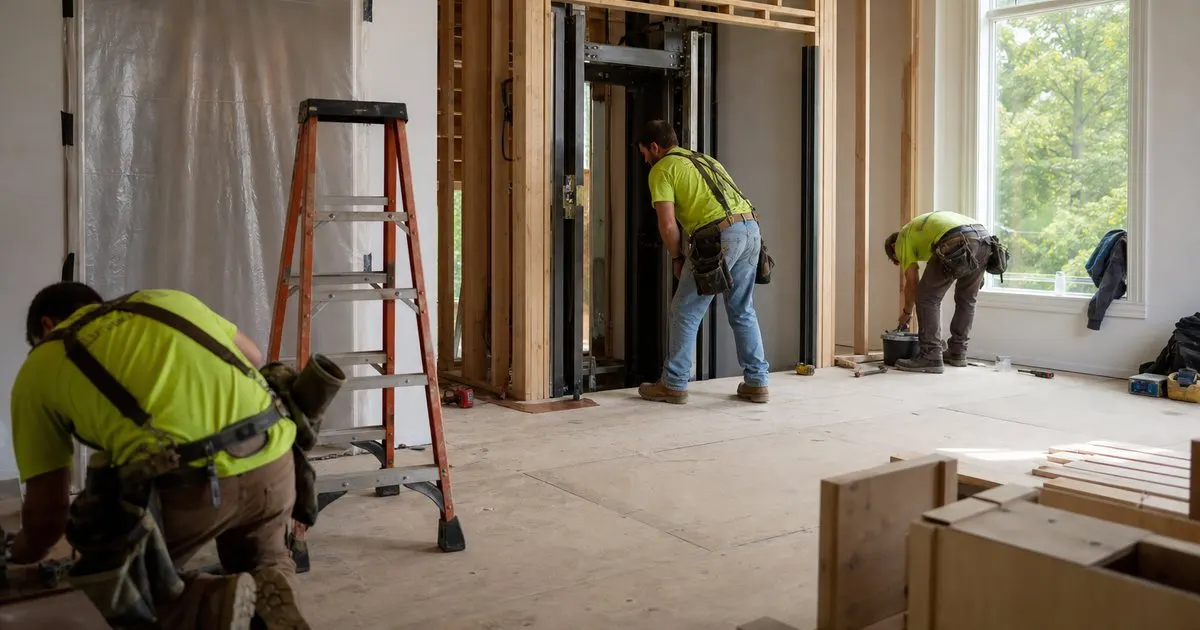
Not every week of an elevator project is equally intrusive, and owners who understand the shape of it cope far better than those who brace for months of chaos. Demolition and structural framing are the loud phases, because that is when floors are opened, headers are set, and a hoistway is effectively built through the middle of the house. Pit work follows, and if the pit sits below grade it can involve saw cutting, hand excavation, concrete placement, and a curing period during which the area is simply off limits to everyone. Expect that stretch to be measured in days rather than weeks, but to be genuinely disruptive while it lasts. Related: What Should Affluent Homeowners Know Before Installing An Elevator In An Existing House?
The longer phases are quieter and much easier to live with. Rail setting, wiring, controller installation, and door work proceed at an ordinary trade pace, with crews arriving and leaving on a normal schedule. Then comes the pause that surprises people most: the equipment is in, the machine technically runs, and nothing visible happens for a while because the jurisdiction has to inspect and sign off before anyone is allowed to ride. Planning your household around three intensities rather than one continuous ordeal changes the experience completely, and it also changes which weeks are worth being away for.
Keep reading: How Much Should You Budget For A Luxury Residential Home Elevator?, Which Home Elevator Drive System Is Quietest And Most Reliable For Villas?, What Should Affluent Homeowners Know Before Installing An Elevator In An Existing House?. See how Homeliftr helps you an expert guide to elegant residential elevators.
Dust, noise, and keeping the rest of the house clean
Cutting through framing, plaster, and especially masonry produces fine dust that travels much further than the work area, settling in rooms nobody opened and inside cabinetry that was closed. The controls that actually work are zippered containment at every opening, plastic sealed to the jamb rather than taped loosely, a negative air machine exhausting outside, and rigid floor protection along the full traffic path. One detail gets missed constantly: shut down or seal the HVAC returns inside the work zone, because a running system will otherwise distribute construction dust through every room in the house within a day.
Noise is the other half of the problem, and it is more negotiable than most owners realize. Agree on a daily start time you can live with, and ask for quiet windows if someone in the house works from home, naps, or is recovering from surgery, which is often the reason the elevator is being installed at all. Hammer drilling and concrete cutting are the two activities worth scheduling deliberately rather than leaving to the crew. If the shaft passes near a primary bedroom or a home office, relocating that function for the loud stretch is easier than enduring it, and pets deserve the same consideration, since a boarding day during demolition costs far less than an animal lost through a propped exterior door. Related: How Much Should You Budget For A Luxury Residential Home Elevator?
Access, openings, and security while the shaft is open
For part of the project your house has a vertical hole running through it. Every floor opening must be guarded while work is underway and solidly covered when the crew leaves, and that is something to verify yourself at the end of each day rather than assume. If children or dogs live in the house, insist on hard barriers rather than caution tape. Ask directly how the shaft will be secured overnight, what happens on days when nobody is scheduled to work, and who is responsible for the opening on a weekend when the general contractor is offsite. Related: How Much Space And Structural Work Does A Residential Elevator Actually Require?
Access is the second issue and it is usually underestimated. Rails, cab panels, and the drive assembly arrive in long crates that need a clear route from the street to the shaft, and someone has to decide early whether that route runs through the front door, a terrace, a garage, or a temporarily enlarged window opening. Confirm parking, delivery windows, and whether the crew will use a lockbox or be let in each morning. If you employ household staff or run a monitored alarm, brief them and adjust codes before the first delivery instead of after the first false alarm, and decide in advance which interior doors stay locked throughout.
Staging the project around your household
The best outcomes belong to owners who treat the schedule as something to negotiate rather than endure. Ask for a phase calendar at contract signing, with the loud work grouped into a defined block rather than scattered across months, and ask what typically triggers a pause: an inspection, a long lead component, or a handoff between the elevator crew and the general contractor. Wherever possible, align the noisiest week with travel you had already planned. Owners retrofitting a second residence often sequence the entire project into the off season for exactly this reason, and it is a habit worth borrowing even for a primary home. Related: Which Home Elevator Drive System Is Quietest And Most Reliable For Villas?
Then set a few simple house rules and put them in writing alongside the contract. A designated crew entrance and bathroom, agreed rules on smoking and radios, and a single point of contact who answers your questions rather than four trades each interpreting a request differently. Finally, agree on what completion means before the last payment is released: the cab operating smoothly, doors adjusted, the inspection passed, the punch list closed, the site cleaned, and a proper walkthrough in which someone shows you the emergency phone, the manual lowering procedure, and how to confirm the battery backup is working.
- Demolition, pit work, and structural framing are the loud phases, and they are usually measured in days rather than weeks.
- Sealed containment, a negative air machine, and shutting down HVAC returns in the work zone keep dust out of the rest of the house.
- Verify yourself, every evening, that floor openings are covered and the shaft is secured before the crew leaves.
- Negotiate a phase calendar, a single point of contact, and a written definition of completion before you sign anything.

Julien Jimenez
Julien Jimenez is an independent software builder based in Paris. He designs, ships, and operates focused SaaS products for small businesses and independent professionals. Read the full author page.
Elevate the Home You Love
An expert guide to elegant residential elevators. Homeliftr is built to help you put this into practice.
Request a consultationMore from the Homeliftr blog
How Much Should You Budget For A Luxury Residential Home Elevator?

Which Home Elevator Drive System Is Quietest And Most Reliable For Villas?
What Should Affluent Homeowners Know Before Installing An Elevator In An Existing House?
Get the complete residential home elevators guide
Our full buying guide, the price guide, and new research as we publish it. One email, no spam, unsubscribe any time.