When Should You Choose A Full Home Elevator Over A Stair Lift Or Platform Lift?
Three very different machines solve the same problem of getting between floors. How to weigh cost, dignity, resale, and daily use before committing to any of them.

What each machine actually is
A stair lift is a motorized seat on a rail fixed to the stair treads; the rider sits, buckles in, and travels the staircase at walking pace. It is the least expensive and least invasive option, installs in a day or two, and can be removed later. A vertical platform lift, sometimes called a wheelchair lift, is an open or partly enclosed platform that rises straight up between two levels, most often a few feet to one story, and is common at entries, decks, and garages. A residential elevator is an enclosed car in a hoistway serving two or more floors, built into the house as a permanent feature. Related: Which Home Elevator Drive System Is Quietest And Most Reliable For Villas?
Each is governed by its own safety standard, sits in its own price band, and suits a different set of people. The stair lift assumes the rider can transfer to a seat and does not need to bring a wheelchair along. The platform lift assumes a wheelchair or scooter and a short rise. The elevator assumes nothing about the rider, which is precisely why it costs the most and why it is the only one of the three that most people consider an upgrade to the house rather than a piece of medical equipment.
Keep reading: How Much Should You Budget For A Luxury Residential Home Elevator?, Which Home Elevator Drive System Is Quietest And Most Reliable For Villas?, What Should Affluent Homeowners Know Before Installing An Elevator In An Existing House?. See how Homeliftr helps you an expert guide to elegant residential elevators.
Cost, disruption, and what you get for it
In broad terms, a stair lift is typically priced in the low thousands for a straight stair and considerably more for a curved one; a platform lift lands in the mid range; and a residential elevator, including construction, is the most expensive by a wide margin. The elevator's cost, however, buys a machine with a design life measured in decades, a capacity that carries groceries, luggage, furniture, and guests, and a place in the floor plan that architects can make beautiful. The other two remain visibly what they are. Related: How Much Should You Budget For A Luxury Residential Home Elevator?
Disruption follows the same order. A stair lift bolts to the treads with no construction. A platform lift needs a small pit or ramp, a level pad, and a power circuit, and an enclosure if it rises more than a modest height or serves an interior space. An elevator needs a hoistway, structure, permits, and weeks of work. For a household facing an urgent mobility change, that timeline alone can decide the matter: the stair lift solves the problem this month while the elevator is designed.
When the elevator is the right answer
Choose the elevator when the need is permanent, when a wheelchair or a caregiver must travel with the rider, when the house has three or more levels, or when the staircase is a design feature you refuse to clutter. Choose it also when resale matters: a well-integrated elevator in a luxury home is widely read by buyers as an amenity, while a stair lift is often removed before listing. Households with young children, frequent guests, and heavy daily loads between a garage and an upper kitchen find the elevator earns its keep long before anyone needs it for mobility. Related: What Should Affluent Homeowners Know Before Installing An Elevator In An Existing House?
The elevator is also the answer when dignity is the priority. Transferring onto a stair lift seat in front of dinner guests, or riding an open platform lift at the front door, is tolerable for some people and quietly humiliating for others. An elevator lets a person move through their own house exactly as everyone else does. That is not a technical specification, but for many families it is the deciding one.
When a lift is the smarter choice
A stair lift is the right call when the need is temporary, such as recovery from surgery, when the budget is limited, when the house is a rental or a short-term residence, or when the rider can transfer easily and does not need to bring a wheelchair upstairs. Modern units fold compactly, and curved-rail models can follow complex staircases. A platform lift is the right call for a short exterior rise, an entry with steps, a split-level home, or a garage-to-main-floor change where a full elevator would be excessive. Related: How Do You Choose Between Hydraulic, Traction, And Pneumatic Home Elevators?
Combining machines is often the elegant solution. A platform lift at the entry handles the outdoor steps, an elevator handles the interior floors, and a stair lift covers a secondary stair to a finished attic or a lower-level media room. The wrong choice is usually the one made in a hurry: a stair lift installed on a grand staircase because it was quick, or an elevator forced into a house where a platform lift would have served. Take a survey from a dealer who sells all three and ask which they would put in their own home.
- A stair lift is quick and inexpensive; a platform lift suits short rises; an elevator is the permanent, whole-house solution.
- Choose the elevator for permanent needs, wheelchair plus companion travel, three or more levels, and resale value.
- Choose a stair lift for temporary needs, tight budgets, or riders who transfer easily.
- Mixed solutions, such as a platform lift at the entry and an elevator inside, are common in larger homes.

Julien Jimenez
Julien Jimenez is an independent software builder based in Paris. He designs, ships, and operates focused SaaS products for small businesses and independent professionals. Read the full author page.
Elevate the Home You Love
An expert guide to elegant residential elevators. Homeliftr is built to help you put this into practice.
Request a consultationMore from the Homeliftr blog

How Much Should You Budget For A Luxury Residential Home Elevator?

Which Home Elevator Drive System Is Quietest And Most Reliable For Villas?
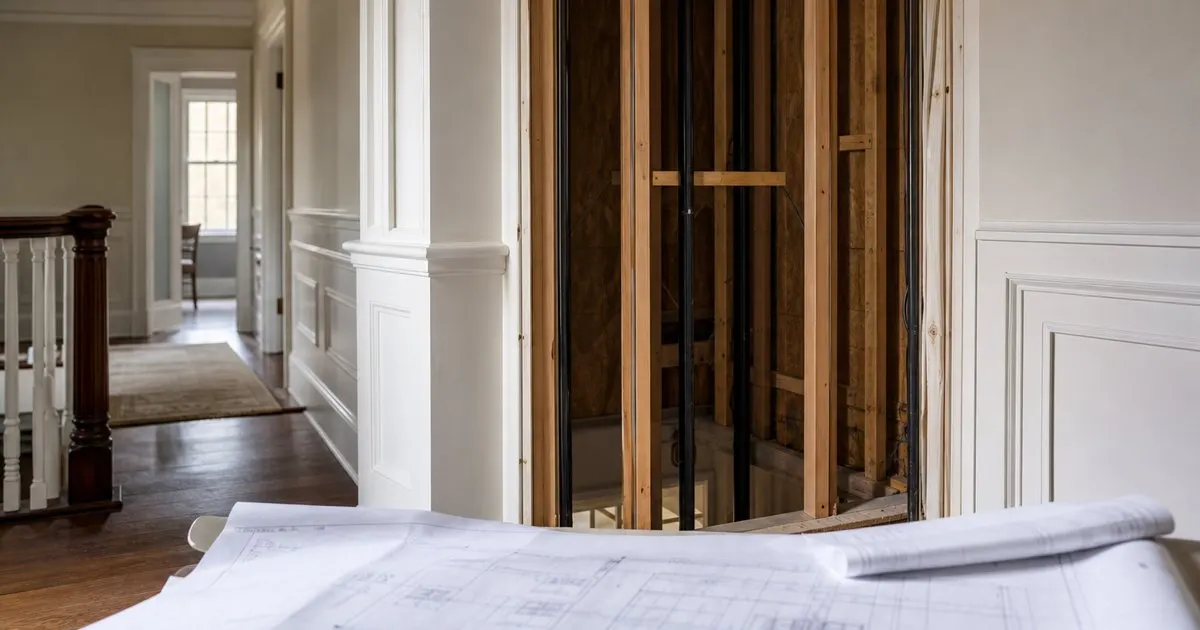
What Should Affluent Homeowners Know Before Installing An Elevator In An Existing House?
Get the complete residential home elevators guide
Our full buying guide, the price guide, and new research as we publish it. One email, no spam, unsubscribe any time.