Which Home Elevator Features Matter Most For Coastal, Humid, Or Flood Prone Properties?
Salt air, humidity, and rising water treat elevators differently from the rest of the house. What to specify for a beach house, a bayou estate, or any property in a mapped flood zone.
Why the coast is hard on elevators
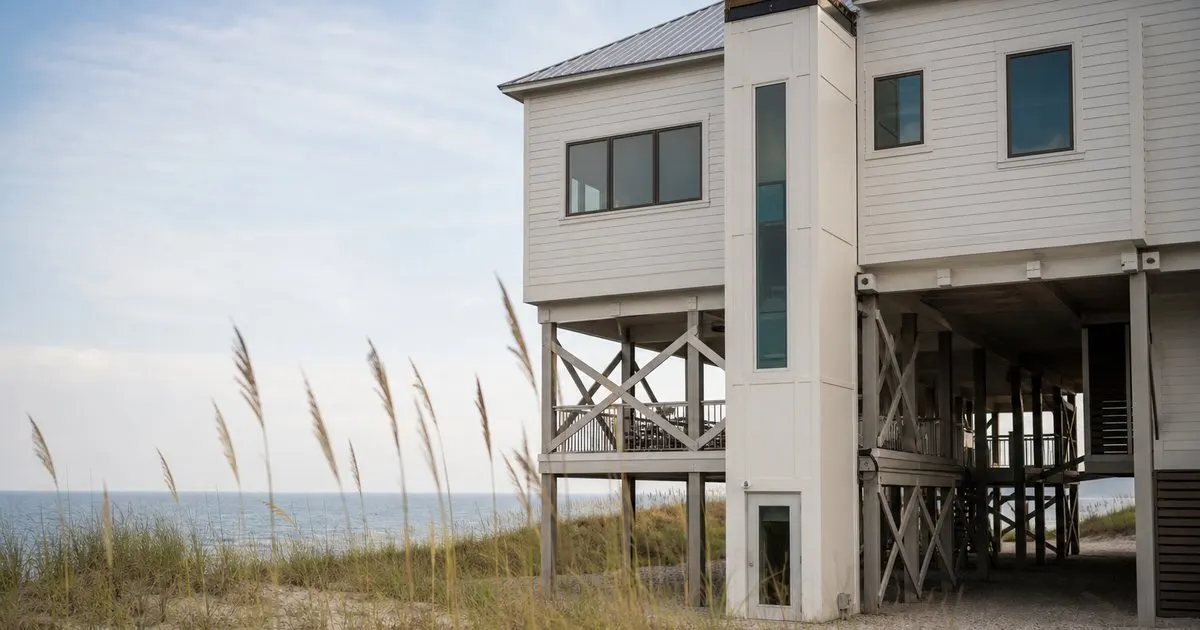
An elevator is a precise machine living in a shaft that is often the least conditioned space in the house. On the coast, salt-laden air reaches that shaft through every gap, settles on steel rails and fasteners, and starts corrosion that a homeowner never sees until a technician finds pitted rails or seized hardware. Humidity does the same work inland in the Gulf states and the Southeast, adding condensation on cool metal, swollen wood cab panels, and electronics that fail early. Related: What Should Affluent Homeowners Know Before Installing An Elevator In An Existing House?
Flood risk is a separate problem. Elevator pits are the lowest point in most homes, machinery is often on the lowest floor, and water in either means an expensive replacement rather than a repair. Homes in mapped flood zones face regulations on where machinery can be placed and how the shaft is built below the design flood elevation, and flood insurers have their own expectations. Specifying an elevator for these conditions is mostly about materials, placement, and keeping the enclosure controlled.
Keep reading: How Much Should You Budget For A Luxury Residential Home Elevator?, Which Home Elevator Drive System Is Quietest And Most Reliable For Villas?, What Should Affluent Homeowners Know Before Installing An Elevator In An Existing House?. See how Homeliftr helps you an expert guide to elegant residential elevators.
Materials and finishes that survive salt and humidity
Ask the manufacturer what corrosion protection is available for the rails, brackets, and fasteners, and specify the higher grade. Stainless or hot-dip galvanized hardware, coated rails, and marine-grade exterior door assemblies are common options, and the cost difference is small against the cost of replacing them. Inside the cab, favor finishes that tolerate moisture: solid surface, stone, powder-coated or stainless metals, and marine-grade plywood substrates under veneers rather than standard fiberboard, which swells and delaminates.
Electronics are the weak point. Controllers and drives should be mounted in enclosures rated for damp locations, in a space that is conditioned or at least ventilated and dehumidified, rather than in an unconditioned garage or an open-air underhouse. Some owners install a small dehumidifier in the machine closet or the hoistway with a condensate drain, which is a modest investment that meaningfully extends the life of every metal and electronic component in the system.
Designing for flood zones
If the property sits in a mapped flood zone, start with the local floodplain administrator and your flood insurance provider before the elevator design is drawn. Federal guidance on elevators in flood-prone buildings generally calls for machinery, controls, and electrical equipment to be located above the design flood elevation, for any part of the shaft below that elevation to be built of flood-resistant materials, and for the elevator to be prevented from descending into floodwater. Many manufacturers offer a float switch or water sensor in the pit that sends the car to an upper landing and disables the lower stop when water is detected. Related: How Do You Choose Between Hydraulic, Traction, And Pneumatic Home Elevators?
Placement decides a lot. Elevators serving elevated coastal homes often run from a ground-level parking area up to the living floors, which means the lowest landing and the pit are precisely where water arrives. Design the lower enclosure to drain and dry quickly, keep the machine and controller upstairs, and consider drive types that suit the situation: a machine-room-less traction unit with the equipment at the top of the shaft, or a pneumatic elevator that needs no pit at all, both keep the sensitive parts high. Related: Which Home Elevator Drive System Is Quietest And Most Reliable For Villas?
Ownership habits that make the difference
In coastal and humid climates the maintenance interval should be shorter than the manufacturer's default, with the technician specifically checking for corrosion on rails, ropes or chains, and fasteners, and looking for moisture inside enclosures. Keep the shaft doors closed, keep the shaft as conditioned as the rest of the house where possible, and rinse exterior components with fresh water after storms if the shaft is outside. A hurricane checklist should include sending the car to the top landing and switching off the power at the disconnect.
After any flooding, do not run the elevator until a technician has inspected it, even if the water never reached the machinery. Silt and salt in the pit, wet wiring, and contaminated hydraulic components all cause failures weeks later. Document the elevator's condition with photographs before and after storms for insurance, and keep the manufacturer's flood guidance with your home records. A coastal elevator, specified and cared for this way, is no less reliable than one in the desert; it simply cannot be ignored. Related: How Much Should You Budget For A Luxury Residential Home Elevator?
- Specify corrosion-resistant rails, fasteners, and hardware, and moisture-tolerant cab substrates from the start.
- Keep controllers and drives in conditioned, ventilated space, and consider a dehumidifier in the machine closet.
- In flood zones, put machinery above the design flood elevation and add a pit water sensor that parks the car upstairs.
- Shorten the service interval, prepare a storm checklist, and never run the elevator after flooding without an inspection.

Julien Jimenez
Julien Jimenez is an independent software builder based in Paris. He designs, ships, and operates focused SaaS products for small businesses and independent professionals. Read the full author page.
Elevate the Home You Love
An expert guide to elegant residential elevators. Homeliftr is built to help you put this into practice.
Request a consultationMore from the Homeliftr blog
How Much Should You Budget For A Luxury Residential Home Elevator?
Which Home Elevator Drive System Is Quietest And Most Reliable For Villas?
What Should Affluent Homeowners Know Before Installing An Elevator In An Existing House?
Get the complete residential home elevators guide
Our full buying guide, the price guide, and new research as we publish it. One email, no spam, unsubscribe any time.