Why Does A Home Elevator Need Battery Backup, And What Happens In A Power Outage?
What actually happens inside a residential elevator when the lights go out, how battery lowering and generators differ, and how to specify backup power that fits your house.
What happens the moment the power fails
When utility power drops, the elevator's main drive stops immediately. On a well-specified residential unit, the controller switches to a battery system that does three things: keeps the cab lights and the communication device working, brings the car to the nearest landing (or the lowest landing, depending on the design) at a slow speed, and releases the door lock so the rider can step out. The whole sequence typically takes well under a minute, and most riders describe it as a brief pause followed by a normal exit. Related: How Much Should You Budget For A Luxury Residential Home Elevator?
Without backup, the picture is different. The car stops between floors with the emergency light on, the rider uses the phone or intercom to call for help, and a technician or trained person releases the car manually. Hydraulic elevators can often be lowered by a manual valve because gravity does the work; traction and drum systems cannot be moved without power or a specialized procedure. That is the practical reason battery lowering has become a standard expectation in residential elevators rather than an accessory. Related: How Do You Choose Between Hydraulic, Traction, And Pneumatic Home Elevators?
Keep reading: How Much Should You Budget For A Luxury Residential Home Elevator?, Which Home Elevator Drive System Is Quietest And Most Reliable For Villas?, What Should Affluent Homeowners Know Before Installing An Elevator In An Existing House?. See how Homeliftr helps you an expert guide to elegant residential elevators.
Battery lowering versus full battery operation
The terms are used loosely by dealers, so ask precisely. Battery lowering (sometimes called emergency lowering) means the batteries have enough capacity to bring the car to a landing, open the door, and keep the lights and phone alive for a period of hours. It does not let you keep using the elevator. Some systems offer a larger battery pack that provides a limited number of full trips, which suits owners who need to move between floors during a multi-hour outage.
Battery systems require maintenance. Sealed batteries typically need replacement every few years, and a battery that has quietly failed will not be discovered until the day it is needed. Your service contract should include testing the backup under load at each visit, not just checking that the indicator light is on. It is worth asking the technician to demonstrate the lowering sequence at commissioning so you know what it feels like before it happens at night during a storm.
Standby generators and the elevator circuit
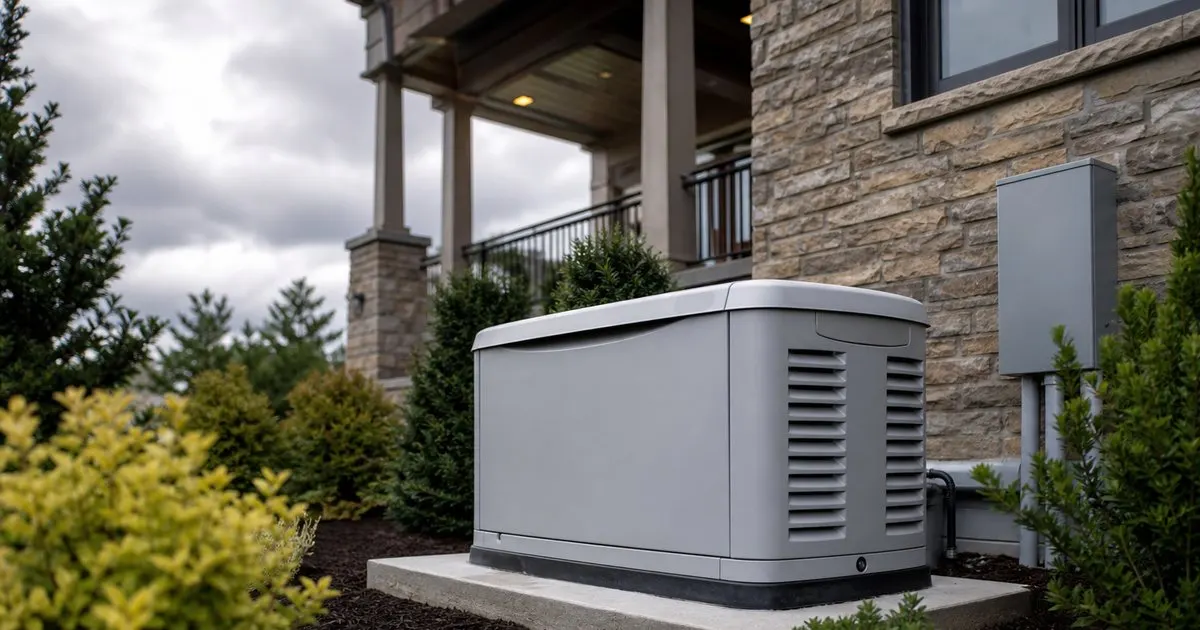
A whole-house standby generator is the more complete answer, and many luxury homes already have one. The question is whether the elevator is on the generator-backed panel and whether the generator can handle the motor. Elevator drives, particularly hydraulic pumps, draw a large inrush current at start-up, and a generator sized for lights and refrigeration may stall or trip when the elevator starts. The elevator's electrical drawings list the motor size and starting characteristics; give those to the generator contractor and the electrician before anything is ordered. Related: What Should Affluent Homeowners Know Before Installing An Elevator In An Existing House?
The transfer switch also matters. A modern variable-frequency drive is sensitive to power quality, and the brief interruption when the transfer switch flips can leave the controller in a fault state that requires a reset. Reputable manufacturers document how their controllers behave on generator power; ask for that document. Even with a generator, keep the battery lowering system, because the generator takes several seconds to start and the batteries cover that gap. Related: Which Home Elevator Drive System Is Quietest And Most Reliable For Villas?
Specifying backup power for your house
Start with how the house is used. A vacation home on a coast that loses power in every storm needs both a generator and battery backup, plus a service provider who can reach it. A primary residence in a suburb with reliable power and an owner who can use the stairs might be fine with battery lowering alone. A home occupied by someone with limited mobility should treat full backup operation as part of the accessibility specification rather than a luxury.
Write the requirement into the purchase contract in plain terms: what the battery does, how long the lights and phone last, whether full trips are possible, how often the batteries are tested and replaced, and how the elevator behaves on generator power. Then test it. Once the elevator is commissioned, have the technician cut the main breaker with someone in the car and confirm the car lands, the door releases, and the phone works. A backup system that has been demonstrated is one you can trust.
- Battery lowering brings the car to a landing and opens the door; it does not keep the elevator running.
- Hydraulic cars can often be lowered by hand; traction and drum systems depend on backup power.
- A generator must be sized for the elevator motor's start-up draw, and the controller must tolerate transfer switching.
- Specify, test, and maintain the backup, including load testing the batteries at every service visit.

Julien Jimenez
Julien Jimenez is an independent software builder based in Paris. He designs, ships, and operates focused SaaS products for small businesses and independent professionals. Read the full author page.
Elevate the Home You Love
An expert guide to elegant residential elevators. Homeliftr is built to help you put this into practice.
Request a consultationMore from the Homeliftr blog

How Much Should You Budget For A Luxury Residential Home Elevator?

Which Home Elevator Drive System Is Quietest And Most Reliable For Villas?
What Should Affluent Homeowners Know Before Installing An Elevator In An Existing House?
Get the complete residential home elevators guide
Our full buying guide, the price guide, and new research as we publish it. One email, no spam, unsubscribe any time.